The Harsh Environment Design Challenge
Wire harnesses installed in military, industrial, marine, and outdoor field equipment face conditions far beyond typical indoor electronics: continuous vibration, temperature extremes, chemical exposure, and physical abrasion. A harness engineered without these conditions in mind will fail long before the host equipment reaches end of life, often at the connector-to-cable transition or at points of repeated flexing.
Core Environmental Threats and Design Responses
Vibration and Mechanical Shock
Continuous vibration — common in vehicles, industrial machinery, and aerospace platforms — fatigues conductors and loosens connector retention over time. Ruggedized harness designs specify positive-locking connectors, secondary mechanical retention (such as Connector Position Assurance clips), and generous strain relief at every termination point to keep conductors isolated from repetitive flex stress.
Temperature Extremes
Harsh-environment harnesses must specify wire insulation and connector housing materials rated for the full expected temperature swing — from sub-zero cold starts to under-hood or industrial oven-adjacent heat. High-temperature specialty cables using nickel-plated copper conductors and glass-braid insulation can tolerate continuous exposure well beyond standard PVC-jacketed wire limits.
Chemical and Fluid Exposure
Equipment operating around fuels, oils, coolants, or industrial solvents needs conductor jackets and connector housings resistant to chemical attack. Material selection here directly affects long-term reliability — a jacket that degrades on contact with hydraulic fluid will crack and expose conductors regardless of how well the rest of the harness is designed.
Abrasion and Physical Wear
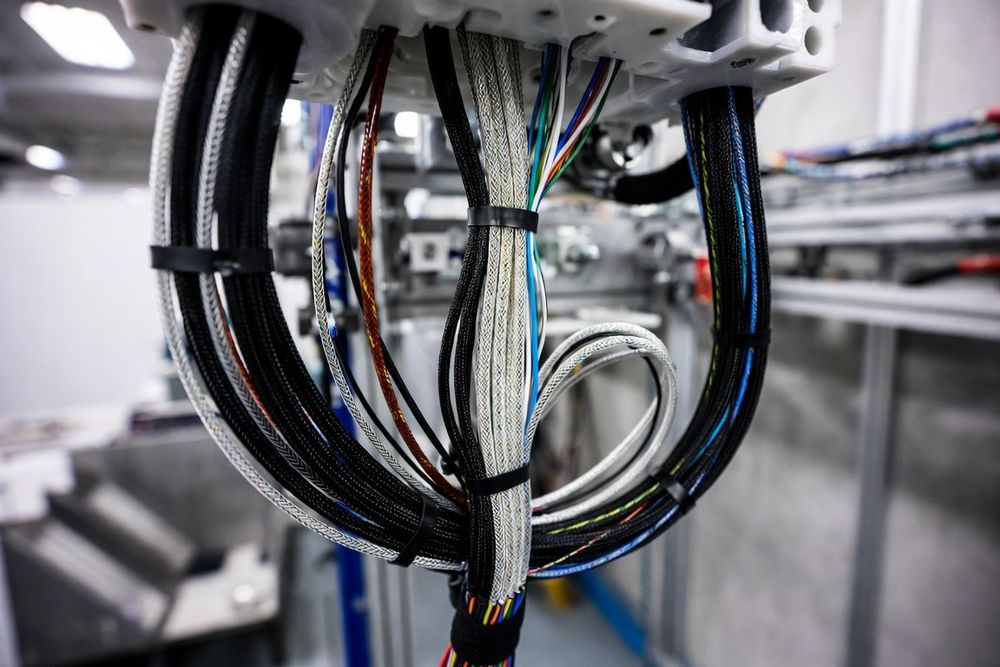
Harnesses routed through moving machinery or across surfaces prone to rubbing need heavy braided sleeving, conduit, or abrasion-resistant overbraiding to prevent insulation wear-through over the product's service life.
Environmental Sealing and IP Ratings
Where a harness must resist water or dust ingress at its connector interfaces, specify connectors rated to the appropriate IP (Ingress Protection) class for the application — IP67 for temporary submersion resistance, or IP69K for high-pressure, high-temperature washdown environments common in food processing and heavy industrial equipment.
Ruggedized Overmolding
For the harshest applications, overmolding the connector-to-cable transition in a chemically resistant thermoplastic provides both superior strain relief and a continuous sealed barrier against moisture and contamination — a combination that a separately assembled boot and gasket arrangement struggles to match.
Design Verification
Harsh-environment harness designs should be validated against the actual expected conditions before production release — vibration testing per relevant standards (such as USCAR-2 for automotive or MIL-STD-810 for defense applications), thermal cycling, and, where applicable, salt spray or chemical immersion testing — rather than relying on datasheet ratings alone.